
Services
What we offer for you
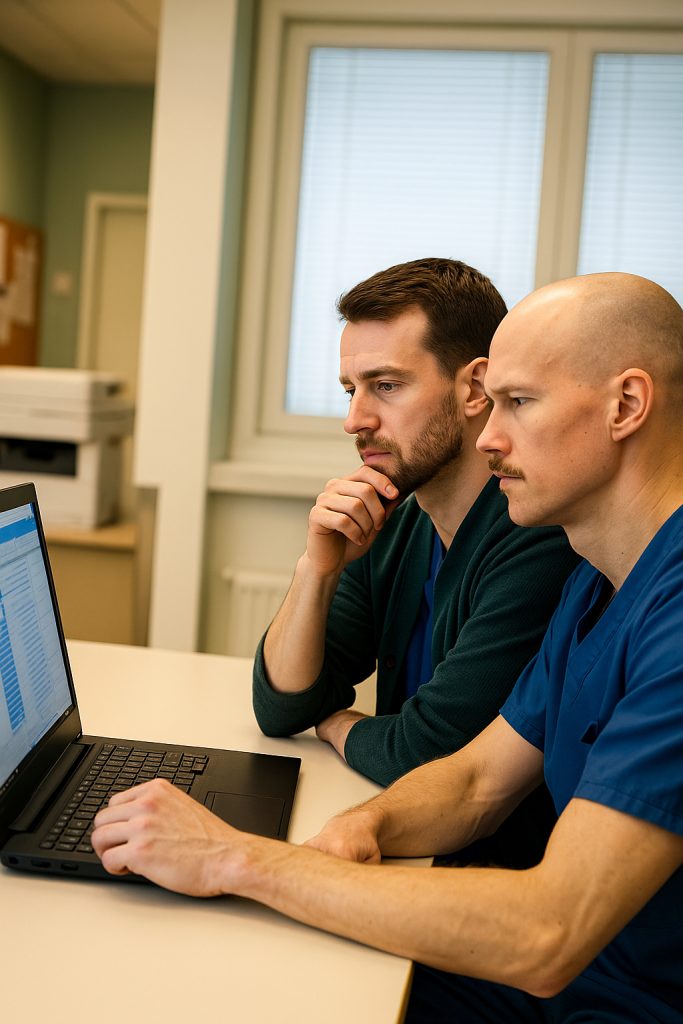
Monitoring
High-quality monitoring is the foundation of reliable clinical research and patient safety. We ensure that your study is conducted in accordance with GCP guidelines, current legislation, and the approved protocol and that all collected data is complete, accurate, and fully traceable.
We work flexibly across both academic and commercial drug and medical device studies, supporting all phases of the trial from preparation to final reporting.
What monitoring includes
Our monitoring services can be delivered as a full package or as selected components, depending on the needs of your study:
- Assessment of site readiness prior to study initiation
- Site training and initiation meetings (Investigator Meetings, Site Initiation Visit)
- Regular on-site and remote monitoring visits
- Source data and documentation verification (SDV, CRF/eCRF review, source documents, contracts)
- Adverse event review and verification of reporting compliance
- Oversight of study materials and device accountability
- Risk-based and quality-driven oversight of data collection
- End-of-study close-out visits and final reconciliation of study documentation
Regulatory services
A successful clinical study requires well-prepared regulatory documentation and a smooth, investigator-friendly submission process.
We help ensure that your study meets all applicable ethical and regulatory requirements. With our support, your study can be initiated on schedule without unnecessary delays.
What our regulatory services include
Each service package is tailored to the specific phase and scope of your study and may include:
- Preparation and review of study documents
(study protocol, investigators’ brochure, patient information sheets, informed consent forms) - Preparation and submission of ethics committee applications
- Regulatory applications including submissions via the CTIS system
- Coordination of local institutional approvals at study sites
- Support with study contracts and budgeting
- Regulatory correspondence and responses to requests for further clarification
- Amendments and extensions during the course of the study
- End-of-study notifications and guidance on documentation archiving


Participant recruitment
Effective study participant recruitment ensures that your study stays on schedule and achieves sufficient statistical power.
Our recruitment process is built on an extensive professional network and practical operational models that allow us to identify and reach suitable participants efficiently and ethically.
What participant recruitment includes
Our recruitment service is tailored to each study and may include:
- Designing a recruitment strategy and study-specific recruitment plan
- Mapping potential target populations
- Developing ethically approved contact models (hospitals, primary care, private clinics, patient organisations, public announcements)
- Collaborating with study sites in patient identification and referral
- Preparing recruitment and communication materials (leaflets, web content, investigator materials)
- Scheduling and ongoing follow-up of recruitment activities
- Identifying recruitment bottlenecks and planning corrective actions
Research nurse services
Skilled research nurse support keeps day-to-day study operations running smoothly, improves protocol adherence, and reduces the workload on investigators and coordinators.
Our research nurse services combine hands-on clinical experience with GCP-compliant documentation practices, which ensures participant safety, consistent data quality, and efficient site workflows.
What research nurse services include
Our research nurse service is tailored to each study and may include:
- Supporting participant screening and eligibility verification per protocol
- Coordinating study visits, scheduling, reminders, and participant follow-up
- Conducting study procedures within scope
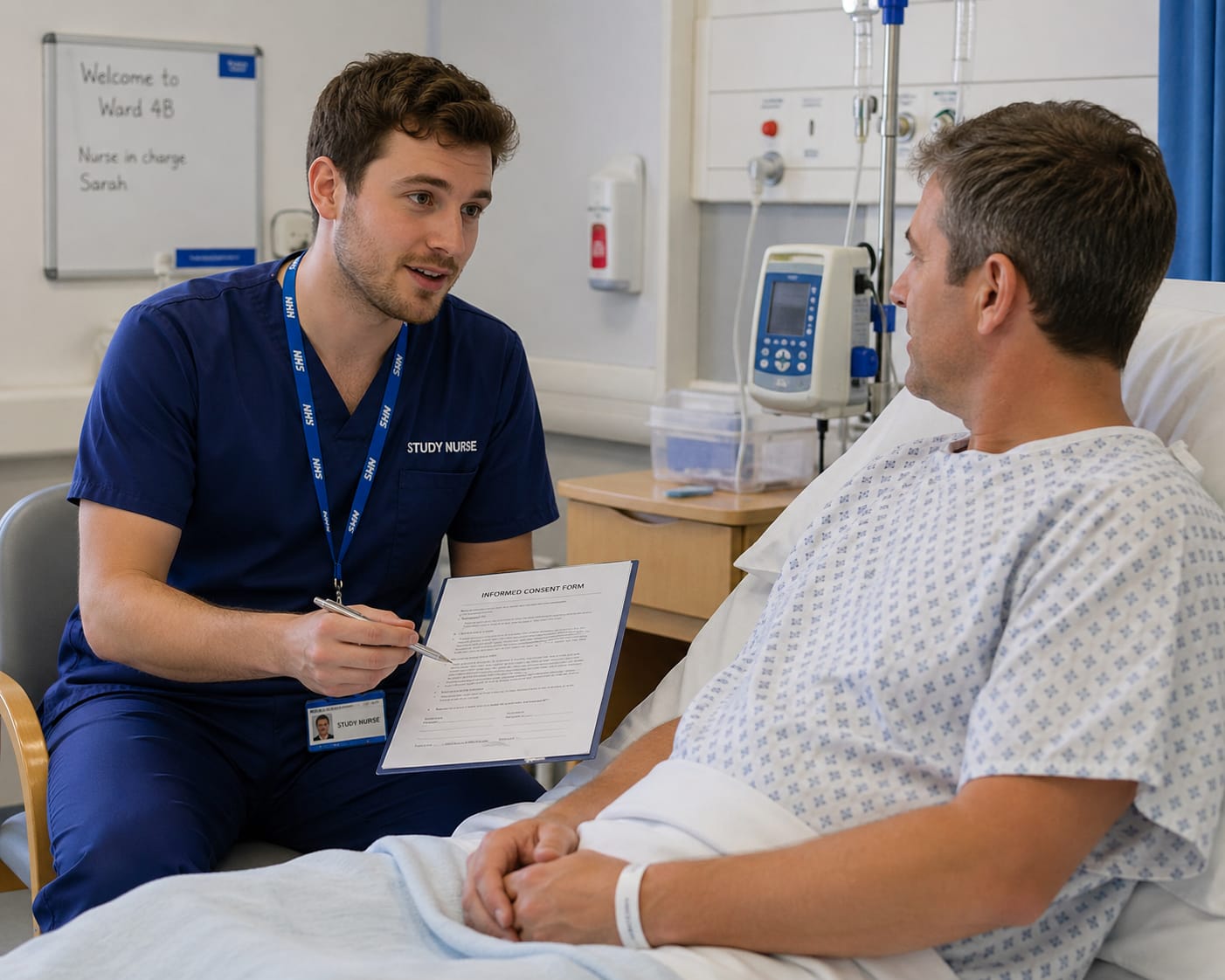
- Informed consent support and documentation
- Investigational Medicinal Product accountability support (receipt, storage checks, temperature logs, dispensing documentation)
- Source documentation and eCRF support (timely, accurate entries; query resolution with the site team)
- Sample collection logistics and shipment coordination (kits, labeling, chain of custody, couriers)
- AE/SAE documentation support and escalation workflows per protocol
- Training and harmonising site routines (checklists, visit workflows, protocol “tips & pitfalls”)

Data analysis
Professional data analysis turns your study data into clear, decision-ready evidence—supporting scientific conclusions, regulatory credibility, and publishable outputs.
Our approach is pragmatic and transparent: we align analysis methods with the protocol and endpoints clearly and deliver outputs that withstand audit and peer review. When needed, we complement our core team with experienced partner resources to ensure the right expertise and capacity for each project.
What data analysis includes
Our data analysis service is tailored to each study and may include:
- Clinical data extraction
- Preclinical data analysis (histology, clinical chemistry, other endpoints)
- Statistical analysis plan support or full development (endpoints, estimands, missing data, sensitivity analyses)
- Data cleaning and validation support (logic checks, outlier review, query strategy, database lock readiness)
- Derivation specifications for analysis datasets (e.g., flags, baseline definitions, windows, protocol deviations)
- Primary, secondary, and exploratory endpoint analyses (as appropriate to study design)
- Interim analyses support (if applicable): pre-specification, blinded/unblinded workflows, reporting packs
- Tables, listings, and figures for clinical study report and publications; clear visualisations for stakeholders
- Subgroup and covariate analyses with careful interpretation and multiplicity considerations
- Reproducible analysis pipelines (version control, annotated code, traceable outputs)
- Contribution to clinical study report sections: methods, results, and interpretation support